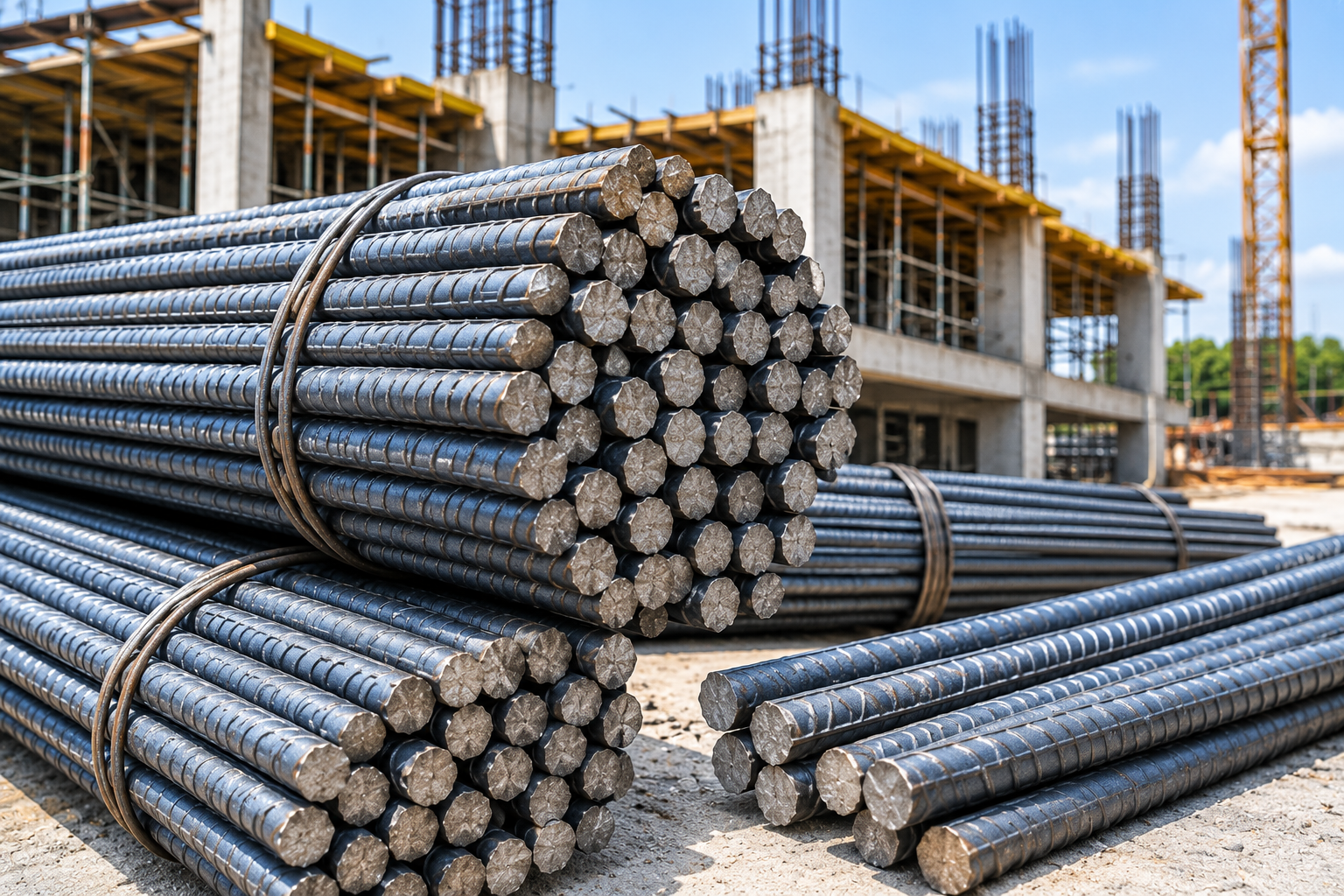
Steel rebar in concrete: the backbone hiding inside modern structures
Walk past a bridge, a parking garage, or a modest neighborhood house, and you probably notice the concrete first. What you do not see is what gives that concrete its real strength: the steel bars buried inside it. In construction, the relationship between concrete and steel is not decorative or optional; it is structural, deliberate, and deeply practical.
That hidden partnership is the reason slabs do not crack apart under load, columns can carry serious weight, and foundations can settle without falling into chaos. When people in Indonesia say besi beton, they are usually talking about reinforcement steel used in concrete work. Whatever the name, the idea is the same: concrete handles compression well, while steel takes care of tension, and together they create something far more capable than either material on its own.
What it is and why it matters
Concrete is excellent at resisting crushing forces, but it is naturally weak when pulled or bent. That weakness becomes a real problem in beams, slabs, lintels, and other parts of a structure that experience stress from movement, weight, wind, or settling ground. Reinforcement steel solves that problem by absorbing tensile forces before cracks can spread.
This is why reinforced concrete dominates so much of modern building construction. It is not just about making something stronger in the abstract. It is about controlling how a structure behaves under real conditions, from a heavy truck passing overhead to a wall carrying the weight of upper floors in a multistory building.
In practice, the steel bars are placed inside concrete in a carefully planned pattern. Their size, spacing, and shape depend on the load, span, and design requirements. A poorly placed bar can be nearly useless, while a properly designed reinforcement cage can keep a structure serviceable for decades.
How reinforcement steel works inside concrete
The science behind reinforced concrete is straightforward, but the implications are huge. Concrete and steel expand and contract at nearly similar rates when temperatures change, which helps them work together without tearing themselves apart. That compatibility is one of the reasons the combination has become so common in structural work.
Steel also bonds well to concrete when both are properly installed. The ridges on deformed bars are not just cosmetic; they help the concrete grip the steel tightly. That bond allows forces to transfer between the two materials instead of letting them slide against one another like loose parts in a box.
Once concrete hardens around the bars, the steel acts like a skeleton hidden inside a shell. The shell provides mass, fire resistance, and compressive strength. The steel provides flexibility and tensile strength. It is a practical marriage, not a glamorous one, but it is the reason so many buildings stand firm through ordinary use and unexpected stress.
Common types and shapes
Not all reinforcing steel is the same. Some bars are smooth, some are deformed, and others come in coils or prefabricated assemblies depending on the application. In structural work, deformed bars are usually preferred because they bond more effectively with concrete.
Bar sizes vary widely. Small-diameter bars may be used for light reinforcement, ties, stirrups, or slab work, while larger bars carry heavier loads in beams, columns, and foundations. The choice is not arbitrary; it follows engineering calculations, code requirements, and the demands of the structure.
There are also practical differences in how bars are supplied and used. Straight lengths are common on job sites, but bent shapes are just as important. Hooks, U-bars, stirrups, and custom bends help anchor the reinforcement and keep it in the right position while concrete is poured and compacted.
| Common form | Typical use | Why it matters |
|---|---|---|
| Deformed bar | Beams, columns, slabs | Improves bond with concrete |
| Smooth bar | Light-duty or special uses | Used where bond demand is lower |
| Stirrup | Beam and column confinement | Resists shear and keeps main bars in place |
| Wire mesh | Slabs and surface reinforcement | Helps control cracking |
Where it shows up in real construction
If you want to see how essential reinforcement really is, look at the parts of a structure that do the hardest work. Foundations rely on it because the soil beneath a building rarely behaves perfectly. Beams need it because they bend under load. Columns need it because they carry forces vertically and must resist buckling and lateral stress.
Slabs are another place where reinforcement quietly earns its keep. A floor slab may seem simple from above, but it is constantly responding to furniture, people, equipment, and temperature changes. Without the right reinforcement, hairline cracks can turn into visible damage, and surface problems can eventually become structural concerns.
Retaining walls, staircases, water tanks, driveways, and bridges all depend on carefully placed steel. Even small residential projects can fail if reinforcement is treated as an afterthought. I have seen more than one homeowner assume concrete alone would be enough, only to discover cracking, sagging, or edge failure within a few seasons.
Grades, standards, and why they matter
Steel reinforcement is not chosen by guesswork. It is governed by material grades, size standards, and project specifications that determine how much stress the bars can safely handle. A bar’s yield strength is especially important because it tells engineers how much force the steel can take before it begins to deform permanently.
Different countries use different standards, but the goal is always the same: predictable performance. Structural steel for concrete work should meet the relevant building code and testing requirements. This keeps the design honest and the construction dependable.
For buyers and contractors, this means paperwork matters. Mill certificates, product markings, and supplier reliability are not boring extras; they are part of knowing whether the material in the yard is fit for the structure on the drawing board. Good reinforcement is not just a bar with the right diameter. It is a material with verified properties.
How size affects strength and use
The diameter of the bar influences how much steel area is available to resist tension. Bigger bars can carry more load, but that does not mean bigger is always better. In tight spaces, too much bar size can make concrete placement difficult and create voids if the mix cannot flow properly around the steel.
Designers balance bar size against spacing, cover, congestion, and constructability. A beam packed with oversized bars may look strong on paper, yet become difficult to pour and finish on site. That is where practical engineering separates a workable design from a messy one.
The same logic applies to light reinforcement. In slabs or small footings, multiple smaller bars may perform better than a few large ones because they distribute stress more evenly and reduce crack width. The right choice depends on the job, not on habit.
Installation: where good plans become good structures
Even the best material can fail if installation is careless. Reinforcement must be placed at the correct depth, tied securely, and supported so it does not shift during pouring. If the bars sink too low or float too high, the resulting concrete cover may be inadequate.
Concrete cover is the layer of concrete between the steel and the outer surface of the structure. It protects the bars from moisture, chemicals, and fire exposure. Too little cover can lead to corrosion. Too much can reduce efficiency if the steel ends up too far from the tension zone.
Site crews use spacers, chairs, ties, and supports to hold the steel in position. These accessories may look minor, but they affect durability more than many people realize. I have walked job sites where perfect-looking bars sat on the ground before the pour, which is basically an open invitation to trouble.
Common installation mistakes
- Insufficient concrete cover
- Bars tied loosely or left displaced during pouring
- Wrong lap lengths at joints
- Rust, dirt, or oil on the reinforcement surface
- Using the wrong bar size or spacing for the design
These mistakes are not glamorous, but they are expensive. A structure may appear fine on day one and still carry hidden defects that shorten its service life. The trouble often shows up later as cracking, rust stains, spalling, or uneven deflection.
Corrosion: the quiet enemy
Steel is strong, but it is not invincible. When moisture, oxygen, and contaminants reach the reinforcement, corrosion can begin. As steel rusts, it expands, and that expansion can crack the surrounding concrete from the inside out.
That process is especially dangerous in coastal areas, parking structures exposed to de-icing salts, and buildings with poor waterproofing. Once corrosion starts, the damage often accelerates. What began as a tiny crack can turn into flaking concrete and exposed bars that need costly repair.
Preventing corrosion starts with proper design and execution. Adequate cover, good concrete quality, proper compaction, and control of cracks all help. In harsh environments, epoxy-coated, galvanized, or stainless reinforcement may be used, though each option brings trade-offs in cost and availability.
Working with concrete mixes
Reinforcement does not operate in isolation. It depends on the concrete mix around it. A mix that is too dry may not flow well around dense steel, leaving pockets and weak spots. A mix that is too wet can lose strength and increase shrinkage cracking.
Vibration and consolidation matter too. If air voids remain trapped around the bars, the bond between steel and concrete suffers. Proper placement and compaction help the two materials behave as a single system instead of two separate ones sharing space.
On larger projects, engineers often pay close attention to aggregate size as well. Big aggregate can become difficult to place in sections with heavy reinforcement, so the mix design has to fit the geometry of the structure. This is one of those details that rarely gets attention from outsiders but makes a huge difference on site.
How to inspect quality before use
Inspecting reinforcement before concrete is poured is one of the smartest habits on any project. It is far easier to fix problems while the steel is exposed than after the structure is sealed under hardened concrete. A quick walk-through can prevent a lot of grief later.
Start with the basics: verify bar sizes, spacing, and quantities against the drawings. Check for excessive bending damage, heavy rust, dirt buildup, and mismatched ties or supports. Surface rust that wipes off easily is usually not a serious issue, but scale, pitting, or contamination is different.
It also helps to look at the setup from the perspective of the pour. Can the concrete actually flow through it? Are the bars stable enough not to move when workers step around them? If the answer is no, the setup still needs work.
- Confirm the bar grade and diameter.
- Check spacing, laps, and anchorage length.
- Verify cover with spacers or measurement tools.
- Inspect cleanliness and corrosion level.
- Make sure the cage is secure before pouring.
Why it is central to durability
Strength gets a lot of attention, but durability may matter even more. A structure that is strong today but deteriorates quickly is not truly well built. Reinforcement contributes to long-term performance by controlling cracking and helping the concrete withstand repeated loading over time.
Cracks are not always a sign of failure, but they do create pathways for water and aggressive substances. Once those substances reach the steel, the structure enters a cycle of damage that becomes harder and more expensive to stop. Good reinforcement design helps break that cycle before it starts.
That is why detailing matters so much. Where the steel goes, how it is anchored, how much cover it has, and how the joints are arranged all influence service life. The best structures do not rely on brute force alone; they rely on thoughtful detailing that anticipates how materials age.
Practical buying advice
For contractors and builders, buying reinforcement is partly a materials decision and partly a risk decision. Price matters, of course, but so does consistency. A cheaper product that varies in size, grade, or straightness can create headaches that erase any savings.
Buying from a reputable supplier helps reduce that risk. Look for proper labeling, dependable delivery, and documentation that matches the order. If a supplier cannot clearly explain what they are selling, that is usually reason enough to keep looking.
It also pays to estimate carefully. Overstocking steel ties up cash and clutters the site. Underordering causes delays and can force substitutions that weaken the design intent. Neither is ideal, and both are preventable with disciplined planning.
Typical uses in different project types
Residential projects usually use reinforcement in foundations, columns, beams, slabs, and stair systems. The loads are smaller than on commercial sites, but the consequences of sloppy work can still be serious. Even a simple house depends on the same structural logic as a larger building.
Commercial structures tend to demand more complex detailing because of greater spans, heavier loads, and stricter performance standards. Parking decks, warehouses, and office buildings may use denser reinforcement patterns, larger bars, or special corrosion protection depending on exposure conditions.
Infrastructure projects raise the bar even further. Bridges, tunnels, retaining walls, and water-related structures face demanding conditions that can expose weaknesses quickly. In those settings, besi beton becomes more than a construction input. It becomes part of the safety margin that keeps the structure reliable under heavy use.
Labor, tools, and the human side of the work
Behind every clean reinforcement layout is a crew that had to measure, cut, bend, tie, and position hundreds or thousands of pieces. The work can look repetitive from a distance, but the skill is real. A good steel fixer knows how to read drawings, anticipate conflicts, and make small adjustments without compromising the design.
The tools are basic, yet the results depend on discipline. Cutting tools, bending equipment, tie wire, pliers, measuring tapes, and supports all play a role. None of them matter much if the crew rushes through the setup or ignores the sequence of work.
I have always found this part of construction oddly revealing. You can tell a lot about a project from how the reinforcement stage is handled. If that stage is neat, deliberate, and checked by someone who cares, the rest of the job usually has a better chance of going smoothly.
Maintenance and repair considerations
When reinforcement has already been damaged or exposed, repair becomes a more delicate matter. The first step is usually to identify the source of the problem, not just patch the visible damage. If water infiltration, cracking, or poor drainage remains untreated, the repair may fail again.
Repair methods vary. Some situations require removing deteriorated concrete, cleaning the steel, applying protective treatments, and rebuilding the section with a proper repair mortar or concrete. In severe cases, supplemental reinforcement or structural strengthening may be necessary.
The earlier the issue is caught, the simpler the repair tends to be. That is another reason regular inspection matters, especially in older structures or aggressive environments. A stain near a slab edge may not look dramatic, but it can be the first sign of a much larger problem below the surface.
What people often misunderstand
One common misconception is that more steel automatically means a stronger structure. In reality, too much reinforcement can create congestion and reduce concrete quality, which may weaken the system instead of improving it. Design is about balance, not just accumulation.
Another misunderstanding is that visible rust always means the material is unusable. Light surface oxidation is often acceptable if the bar still meets specifications and the corrosion is not severe. The real concern is loss of section, contamination, or poor bond conditions.
People also sometimes assume that once the concrete is poured, the reinforcement no longer matters. In fact, the hidden steel continues to influence how the structure performs throughout its life. It is the unseen framework that gives the whole assembly its behavior.
A material with a simple job and complicated consequences
At first glance, reinforcing steel seems plain enough: bars of metal, stacked, cut, and tied together before being buried in concrete. But that simple description hides a complex responsibility. The material must meet spec, fit the design, survive handling, bond with the concrete, and resist deterioration for years.
That is a lot to ask from something most people never see once the job is finished. Yet that is exactly what makes it so important. The strength of a finished structure is not built in the last minute. It begins with the bars laid out correctly, the cover measured carefully, and the pour executed with enough discipline to preserve the design.
For anyone working in construction, designing structures, or simply trying to understand why concrete buildings stand up so well, the answer often starts here. The steel inside does its work quietly. It does not need attention. It just needs to be chosen well, placed well, and protected well. That is enough to hold up everything above it.