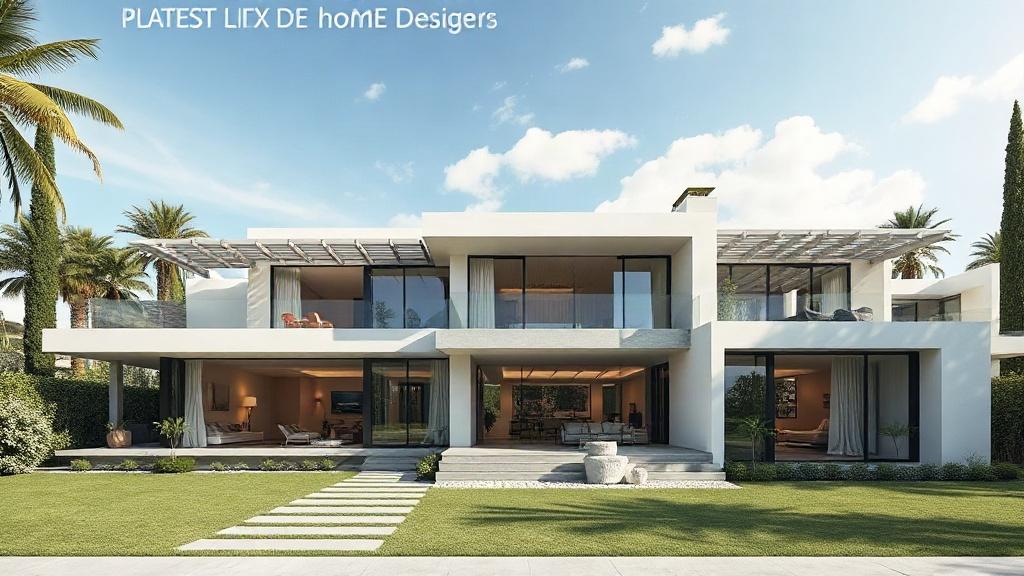
The most compelling homes being built right now do not shout for attention. They persuade quietly, with proportion, light, and details that only reveal themselves after you’ve lived with them for a while. That is the real shift behind the latest modern luxury home designs: less ornament for ornament’s sake, more intention in every surface, opening, and transition.
Modern luxury has moved well beyond marble-heavy showpieces and rooms that look polished but feel stiff. Today’s best homes balance warmth with precision, privacy with openness, and beauty with daily usefulness. They are designed for how people actually live, not just how they want a house to look in photographs.
The new definition of luxury
Luxury used to be easy to spot. It arrived in grand staircases, dramatic chandeliers, and finishes that made the room feel precious. Those signals still exist, but the center of gravity has changed. A truly luxurious home now feels calm, well planned, and deeply livable.
That shift has a lot to do with how people spend time at home. Spaces are expected to do more than one job, and they have to do it gracefully. A kitchen may also be a gathering room, an office may need to disappear into the architecture, and a terrace may need to function as an outdoor living room for much of the year.
What separates a luxury home from a merely expensive one is coherence. Materials, layout, lighting, and circulation all need to work together. When they do, the house feels effortless, even though achieving that simplicity takes a great deal of thought.
Design that feels quiet, not bare
One of the clearest hallmarks of the latest modern luxury home designs is restraint. Surfaces are cleaner, lines are more deliberate, and visual clutter is kept in check. But restraint is not emptiness. The best projects still have texture, depth, and moments that catch the eye.
That might mean a plaster wall with a hand-finished surface, a warm wood ceiling that softens a long room, or stone installed in a way that lets its natural movement do the talking. These choices create richness without noise. The house feels edited, not stripped down.
In homes I’ve walked through over the past few years, the ones that stay with you are often the ones that seem understated at first. Then the light shifts, a material reveals its grain, and you realize the architecture has been doing subtle work all along.
Materials that bring warmth and depth
The material palette in contemporary luxury homes has become more tactile and grounded. Designers are pairing polished surfaces with rougher, more honest ones so the house doesn’t feel sterile. The result is a space that looks refined but still has a human pulse.
Natural stone remains a favorite, but it is being used more thoughtfully. Instead of covering every visible plane, it often appears in focal areas: a monolithic island, a fireplace wall, a bath vanity, or a dramatic entry threshold. Wood, especially in lighter or richly toned finishes, is also playing a larger role in softening modern spaces.
Metal accents are still important, but they tend to be quieter now. Brushed brass, bronzed steel, and matte black finishes work best when they are integrated rather than overused. Their job is to sharpen the composition, not dominate it.
Common material pairings shaping current luxury homes
| Material pairing | Effect | Best use |
|---|---|---|
| Stone and warm wood | Balances strength with comfort | Living rooms, kitchens, baths |
| Glass and dark metal | Creates clean contrast and a sleek edge | Windows, railings, partitions |
| Plaster and oak | Softens modern geometry | Bedrooms, hallways, primary suites |
| Concrete and linen textures | Feels contemporary without becoming cold | Entry areas, lounges, patios |
What matters most is not the individual material but the way they sit beside one another. A room with too many competing finishes starts to feel restless. A room with just a few carefully chosen materials can feel richer than a much more expensive but disorganized one.
Architecture that opens up without losing privacy
One of the biggest challenges in modern residential design is openness. People want daylight, air, and connection between rooms, but they also want privacy and control. The best homes solve that tension with planning rather than gimmicks.
Architects are using courtyard layouts, screened facades, layered glazing, and strategic sightlines to give homes breathing room without exposing everything at once. The experience becomes more nuanced. You move through the house and discover spaces gradually instead of seeing the entire plan in one glance.
This sense of sequence is part of what makes a house feel expensive in a lasting way. Anyone can remove walls. Far fewer people know how to replace them with something better.
Indoor-outdoor living that feels natural
Outdoor connection remains central to luxury home design, but the best examples are no longer just about big sliding doors. They’re about continuity. Floors align, ceiling lines extend outward, and materials travel from inside to outside with minimal interruption.
A terrace or pool area works best when it feels like an extension of the house rather than a separate amenity. Comfortable seating, layered lighting, and weather-resistant finishes help the space function year-round. In warm climates, shade structures and breezeways are just as important as the view.
This is where many modern homes borrow ideas from classic Mediterranean planning, including the elegant balance found in an Italian house model. Courtyards, arcades, and shaded outdoor rooms give the home a slower rhythm, which modern design can use beautifully when it’s not trying too hard.
Floor plans built for real life
Luxury no longer means oversized rooms for their own sake. In fact, overly large spaces can feel awkward if they lack purpose. The best floor plans are generous, but they are also disciplined. Every area earns its place.
That often means fewer formal rooms and more adaptable spaces. A library may double as a retreat. A breakfast nook may become a work spot during the week. A media room might be designed with enough flexibility to host guests without feeling like a single-use box.
Good circulation also matters more than people realize. When a house moves well, it feels better to live in. Hallways, transitions, and thresholds should be treated as design opportunities, not leftover space.
Features many luxury plans now prioritize
- Primary suites with separate sitting areas or dressing rooms
- Back kitchens or prep kitchens hidden from the main entertaining space
- Integrated home offices with acoustic privacy
- Flexible guest rooms that can shift uses over time
- Outdoor rooms that function as true living spaces
- Wellness areas, including gyms, saunas, or recovery rooms
The smartest floor plans anticipate routine. Where do groceries enter? Where do kids drop bags? Where does a coat go when someone walks in through the side entrance? These small questions shape whether a home feels graceful or constantly slightly off balance.
Kitchens that combine performance and presence
The kitchen has become the emotional center of many luxury homes, but it also has to work harder than ever. It must handle entertaining, family life, and everyday cooking without looking overstuffed. That has pushed design toward cleaner layouts and better concealment of utility.
Cabinetry often stretches floor to ceiling, creating a built-in look that reduces visual noise. Appliances are panelized or tucked away where possible. Islands remain important, but many are now sculptural rather than oversized, with edges and materials chosen as much for elegance as utility.
There is also more attention to how the kitchen connects to the rest of the house. Instead of being a closed-off work zone, it often opens into a great room or dining space with a deliberate transition in tone. The trick is to make it feel seamless without losing function.
What makes a kitchen feel truly luxurious
A luxury kitchen is not defined by a single range or a brand name. It’s defined by planning. Storage is where it should be. Prep zones are not fighting for space. Lighting supports both work and atmosphere. Nothing feels accidental.
The best kitchens also resist the temptation to become too glossy. A mixture of matte and reflective surfaces usually feels more sophisticated. Stone, wood, glass, and metal can all live together if the palette is disciplined.
In many of the latest modern luxury home designs, the kitchen island has become more than a work surface. It is a place to gather, a visual anchor, and often the first thing you notice when you enter the main living area. That puts pressure on the design, but when it’s done well, it pays off immediately.
Bathrooms as private retreats
Bathrooms have moved far beyond utility. In high-end homes, they now serve as private retreats with careful lighting, generous storage, and a strong sense of atmosphere. The goal is not spa imitation; it is calm through precision.
Natural stone, large-format tile, and softly diffused light are common elements, but arrangement matters more than finish. A bathroom feels luxurious when there is space to move, surfaces are easy to maintain, and the room does not feel crowded with hardware. Even a compact bath can feel elevated if the proportions are right.
Primary baths often include separate wet and dry zones, larger showers, freestanding tubs, and dressing areas that connect directly to closets. Those adjacencies reduce friction in daily routines. They also make the room feel like part of a larger suite rather than an isolated utility space.
Design details that elevate bathroom spaces
| Detail | Why it matters |
|---|---|
| Layered lighting | Improves function while keeping the room soft at night |
| Integrated storage | Reduces visual clutter and keeps surfaces clear |
| Large mirrors or mirrored panels | Expand the sense of space and reflect natural light |
| Consistent material palette | Makes the room feel calm and unified |
Luxury bathrooms succeed when they feel composed rather than crowded with features. A strong vanity, a well-scaled shower, and carefully chosen finishes usually do more than a long list of upgrades. There is no need to force drama into a room that should encourage quiet.
Lighting as architecture
Lighting has become one of the most important design tools in contemporary homes. Done well, it shapes mood, defines surfaces, and guides movement without drawing attention to itself. Done poorly, it flattens even the most expensive finishes.
The best luxury homes layer light in a way that feels invisible. There is ambient light for general use, task light where needed, and accent light that brings materials and art into focus. Recessed fixtures alone rarely create enough dimension on their own.
Natural light remains the gold standard, but it needs support once the sun goes down. Cove lighting, concealed LED strips, sculptural pendants, and wall washing can make a room feel softer and more expensive. The point is to create depth, not glare.
Why lighting planning deserves more attention
People often choose finishes before they think seriously about lighting, which is backward. The same stone, wood, or paint color can look flat or luminous depending on how it is lit. Lighting design is one of the least visible parts of the process and one of the most consequential.
Luxury homes also benefit from dimming control and scene setting. A room should not have one mood all day long. Morning, dinner, late-night conversation, and cleaning all call for different levels of brightness and contrast.
When lighting is handled well, the architecture becomes easier to read. The house feels intelligent. It knows how to behave at different hours, which is a subtle kind of elegance many newer homes are finally learning to provide.
Technology that stays out of the way
Smart home systems are now expected in high-end residences, but technology has to be discreet. A home can be highly advanced without looking like a showroom for gadgets. In fact, the best systems almost disappear into the background.
Climate control, security, audio, shading, and lighting are increasingly integrated so they can be managed with minimal friction. Hidden speakers, flush-mounted controls, and clean wall treatments help preserve the architectural line. Convenience should feel seamless, not fussy.
That does not mean technology should be ignored visually. It simply needs to be designed with the same discipline as everything else. A luxury home should feel current, not crowded with equipment.
Wellness spaces that are actually useful
Wellness has become one of the more meaningful design trends in luxury housing, but it only works when it is grounded in reality. A home gym no one uses is just expensive storage. A real wellness space supports routines people can keep.
This might include a compact fitness room with good ventilation, a sauna, a cold plunge, a stretching area, or a quiet room for meditation and recovery. Some homes also include natural materials and controlled acoustics to make these spaces feel restorative rather than clinical.
Even the basics contribute to wellness. Better daylight, healthier air systems, quieter interiors, and access to outdoor space all play a role. The most successful homes do not treat wellness as a separate category. They build it into daily life.
Smaller details that support comfort and health
- Operable windows in key rooms for fresh air
- Low-noise HVAC systems
- Warm, dimmable lighting in sleeping areas
- Natural textures that soften acoustics
- Clear zoning between active and quiet parts of the home
There is a noticeable difference between a house that performs wellness and one that merely advertises it. The first one feels restful because it removes small irritations. The second one can feel performative, which fades quickly.
Bedrooms designed for recovery, not display
Bedrooms in luxury homes are becoming more private and more restrained. The emphasis is on sleep, comfort, and decompression rather than visual drama. That does not make them dull; it makes them more thoughtful.
Color palettes are often quieter, with layered neutrals, muted earth tones, or soft contrasts that settle the eye. Upholstered headboards, natural textiles, and generous window treatments contribute to a room that feels sheltered without becoming heavy.
Primary suites often extend beyond the sleeping area to include seating, dressing, and sometimes a small fireplace or private terrace. These additions work best when they are integrated into one clear composition rather than chopped into separate gestures.
The role of personalization
The strongest luxury homes do not feel generic. They reflect the people living in them, whether through art, family ritual, travel memories, or a deep attachment to a certain material or color. Personalization gives architecture an emotional center.
This can be done in subtle ways. A custom bench built into a hallway. A reading room sized for one person’s habits. Cabinetry designed around a collector’s interests. The best personalized details are specific, but they do not overwhelm the design.
There is a fine line here. Too much customization can make a home feel dated fast. Too little, and it feels like a model house. The sweet spot is a design with enough structure to age gracefully and enough individuality to feel lived in from day one.
Why proportion matters more than trend
Trends come and go, but proportion endures. A room can be filled with expensive finishes and still feel wrong if the ceiling height, window placement, or furniture scale is off. That is why the most memorable homes often feel calm before they feel impressive.
Architectural proportion governs the way light moves, how people gather, and whether a room invites you in or pushes you out. In high-end design, this is especially important because the margins for error are small. When everything is large, a misjudged scale becomes very obvious.
Good proportion also keeps a home from aging badly. A balanced facade, a well-sized opening, or a properly scaled staircase will look right long after a trendy finish has lost its shine. That is one reason experienced designers rely on fundamentals even when the aesthetic is thoroughly modern.
Outdoor spaces with the same care as interiors
Luxury homes are increasingly judged by their outdoor rooms as much as their interiors. Patios, pools, kitchens, and lounges are now treated as essential parts of the plan, not afterthoughts. When they are done well, they expand the emotional footprint of the house.
The best outdoor areas use the same design discipline found inside. Furniture has weight and comfort. Lighting is layered. Materials are chosen for both durability and appearance. Even landscaping contributes to the architecture rather than sitting beside it.
Privacy is especially important outdoors. Trees, walls, planted screens, and subtle changes in grade can make a backyard feel intimate without boxing it in. That balance lets the space feel open to the sky and protected at the same time.
Influences from travel and place
Modern luxury design is increasingly shaped by regional identity. A house in California may lean into breezeways and indoor-outdoor flow. A home in New York might focus on compact efficiency and rich materials. In warmer climates, courtyards and shaded loggias continue to influence the way people think about comfort.
Global references are also more visible, but the most successful homes do not feel pasted together from style samples. They translate ideas into a local language. That is where influences such as the Italian house model become useful, not as imitation, but as a reminder that elegance often comes from climate, proportion, and sequence.
Travel can inspire a mood, but architecture has to respond to the site. Sun, wind, privacy, and views all matter more than borrowed style. The best homes respect that reality while still carrying a sense of refinement shaped by broader design traditions.
What to watch next in luxury residential design
The future of high-end homes is likely to keep moving toward flexibility, lower visual noise, and more comfort with less excess. Expect continued interest in sustainable materials, passive design strategies, and homes that age well rather than chase novelty.
There will also be more focus on craftsmanship. As manufacturing becomes more efficient, hand-finished details will stand out even more. People are increasingly drawn to things that feel made rather than merely installed.
That does not mean luxury is becoming timid. It means the strongest designs are becoming more exacting. The homes that matter will be the ones that know what to leave out.
Bringing it all together
The latest modern luxury home designs are not really about a single look. They are about discipline, comfort, and a kind of quiet confidence that shows up in the details. The best homes do not need to prove anything. They simply work, beautifully, day after day.
That is why the most successful projects blend architecture, interiors, landscape, and technology into one experience. They handle the practical parts of life without losing grace. They feel polished without feeling cold, personal without feeling crowded, and current without chasing every passing trend.
In the end, a luxury home earns its value through the way it supports ordinary life. Light falls well. Rooms connect smoothly. Materials age with dignity. And when the design is truly good, you notice less noise in the house and more room to breathe.